TUIT GCRIS Standard Database
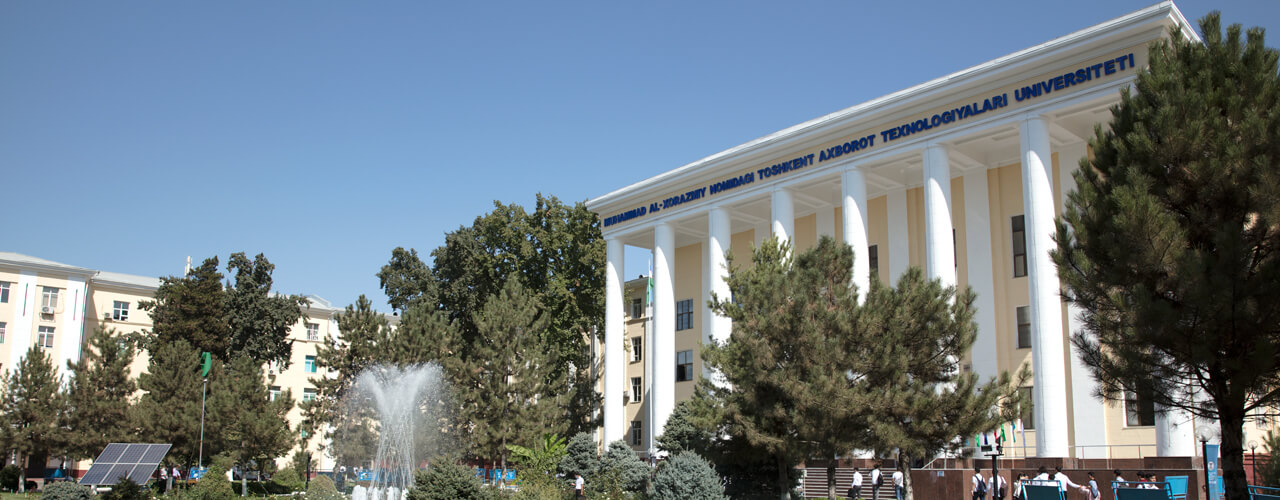
TUIT GCRIS Standard Database, which is a part of Tashkent University of Information Technologies (TUIT) Research Ecosystem, is an Institutional repository at international standards that allows searching and discovering all research outputs in TUIT. It also brings together and organises all kinds of academic outputs related to research activities and allows sharing with the whole scientific world by providing long-term preservation.
Recent Submitted Publications

Citation Count: 0
Application of Daubechies Wavelets in Digital Processing of Biomedical Signals and Images
(Springer Science and Business Media Deutschland GmbH, 2024) Zaynidinov, H.; Juraev, U.; Tishlikov, S.; Modullayev, J.; Department of Artificial Intelligence
Wavelet analysis of one-dimensional signals has proven effective in deciphering the electrocardiogram (ECG). Promising results have already been obtained from their analysis. In particular, it has been shown that anomalous effects in the ECG are mainly manifested on much larger scales (low frequencies), while normal structures are characterized by relatively small scales (high frequencies). Denoising is one of the urgent problems of digital processing of biomedical signals and tomographic images. Wavelet methods are relatively new and are a method of denoising using wavelet functions. Wavelets allow for the analysis of various types of signals and effective noise removal, so it is of particular interest to study their potential to improve image quality. It is very convenient to use DWT (Discrete Wavelet Transform) in digital image processing, because it provides deep insight into the main spatial and frequency features. Wavelets provide excellent time-frequency localization, meaning they can capture both transient and stationary features in signals and images. This localization capability is especially valuable in medical applications where signals may contain abrupt changes or irregular patterns. In this paper, we will discuss the method of biomedical signal restoration and denoising in tomographic images using different wavelet functions such as Haar wavelet, Symlet, Meyer wavelet, Daubechies wavelet. © The Author(s), under exclusive license to Springer Nature Switzerland AG 2024.
Citation Count: 0
A Method for Determining and Evaluating Webometric Indicators of Public Libraries
(Rezekne Higher Education Institution, 2024) Talipova, D.; Ganiyeva, B.; Normatov, S.; Rakhmatullayev, M.; Department of Information and Library Systems
The complexity of modern social communications and the transformation of society's information environment create unique competition among public digital libraries to attract readers. Library websites play an important role in managing the activities of digital libraries and improving their position in the information space. In general, the website is considered the "calling card" of the electronic library. It is not only a means of communication between readers and the library, but also a source of information that allows you to evaluate the activities of the library based on information about the use of library website by readers. The purpose of the study is to develop a data processing method to improve the efficiency of evaluating public library information resources and websites. A method and algorithm for expert assessment of a site using fuzzy logic are proposed. The article presents the possibilities of using web analytics to determine webometric indicators of a library website, study user behavior patterns, as well as analysis that improves the functionality of the site. Libraries are offered a comprehensive method for multi-criteria evaluation of websites. The essence of this method is that with this method we can not only evaluate the website in a traditional way, but also get the following useful results: full evaluation of websites, evaluation of websites according to certain criteria, selective comparison and ranking of websites are presented. An analysis of classification criteria for evaluating public library websites is presented. To minimize subjectivity when evaluating a website, the evaluation process can involve not only experts, but also a wider audience through online and offline surveys. In general, assessment of electronic public library websites is necessary not only to determine the rating of libraries, but also to make the right management decisions, as well as to determine the needs and interests of readers. © 2024 Diyora Talipova, Barno Ganiyeva, Sherbek Normatov, Marat Rakhmatullaev.
Citation Count: 0
Integrated Intelligent System for Scientific and Educational Information Retrieval
(Rezekne Higher Education Institution, 2024) Musaev, M.; Rakhmatullaev, M.; Normatov, S.; Shukurov, K.; Abdullaeva, M.; Department of Information and Library Systems
The relevance of creating information systems using artificial intelligence methods and tools is dictated by the following reasons: The volume of scientific and educational information is growing; Traditional information retrieval methods have exhausted themselves. Using only deterministic and iteration methods, rigid algorithms don't give the expected results. They require more time to process information and more memory. Significant progress in recent years in the development of artificial intelligence (AI) methods and systems gives hope that their use will significantly reduce the time needed to search for data for scientific research and educational activities. The aim of the research results presented in the article is to increase the efficiency for scientific and educational information retrieval based on the use of AI methods implemented in the integrated intelligent information system “SMART TUIT". The article presents the results of theoretical and applied research obtained by several departments of the Tashkent University of Information Technology (TUIT) in solving the following tasks: Voice recognition for subsequent processing; Pattern recognition in order to identify the users of information; Search and processing of scientific and educational resources in electronic libraries; Analysis of information needs of users depending on the level of competence and type of activity; Evaluation of scientific and educational information to identify the most important data sources; Geoinformation system to solve the problems of the location of the information source. Initially, each research area in the departments was aimed at solving a certain class of problems related to medicine, linguistics, electronic libraries, corporate networks, information security systems, etc. The TUIT creative group decided to combine efforts to apply the results obtained to solve the important problem of intellectualizing the search for sources of scientific and educational information among a large amount of data. © 2024 Mukhammadjon Musaev, Marat Rakhmatullaev, Sherbek Normatov, Kamoliddin Shukurov, Malika Abdullaeva.
Citation Count: 0
Experience in Evaluating Legal Scientific Information
(American Institute of Physics, 2024) Normatov, S.; Rakhmatullaev, M.; Urinkulov, O.; Khalmuratov, O.; Department of Information and Library Systems
It is known that scientific information resources in the legal field are an important source of information in the training of qualified personnel in this field, the development of scientific research, and the regulation of relations in the field of law. Despite this, a large number of scientific information resources in the legal field makes the issue of finding the most necessary sources of legal information in certain legal situations very relevant. It is necessary to take into account not only the relevance of information, but also its classical characteristics, such as relevance, accuracy, completeness, and ease of use. This creates the need to evaluate sources of scientific information in the legal field. The purpose of this article is to develop a method for classifying and evaluating sources of scientific information in the legal field. The issue of evaluating information sources related to science and education is one of the important foundations of intelligent information retrieval to improve the efficiency of providing users with the necessary quality literature. © 2024 American Institute of Physics Inc.. All rights reserved.
Citation Count: 0
Clustering Algorithm Based on Object Similarity
(al-Farabi Kazakh State National University, 2024) Nishanov, A.Kh.; Akbarova, M.Kh.; Tursunov, A.T.; Ollamberganov, F.F.; Rashidova, D.E.; Department of System and Applied Programming
The article examines the issue of drug clustering. Initially, k classes are arbitrarily formed and the resulting training sample is pre-processed, then the similarities between the objects of each class are evaluated based on the proximity function and the criterion for evaluating the contribution of objects to the formation of their own class. Usually, it is in percentage and is the degree of mutual similarity of objects of each class. In the next steps of the algorithm, first, one object is taken from the first class, and by adding it to all k classes, the contribution of this object to this class is measured. The object will be left in the class which has the most contribution. This process is repeated several times in a row for all objects of the class. The process is stopped when the location of objects does not change and the degree of similarity exceeds the required percentage. As a result, the required clusters are formed. © 2024 Al-Farabi Kazakh National University.